
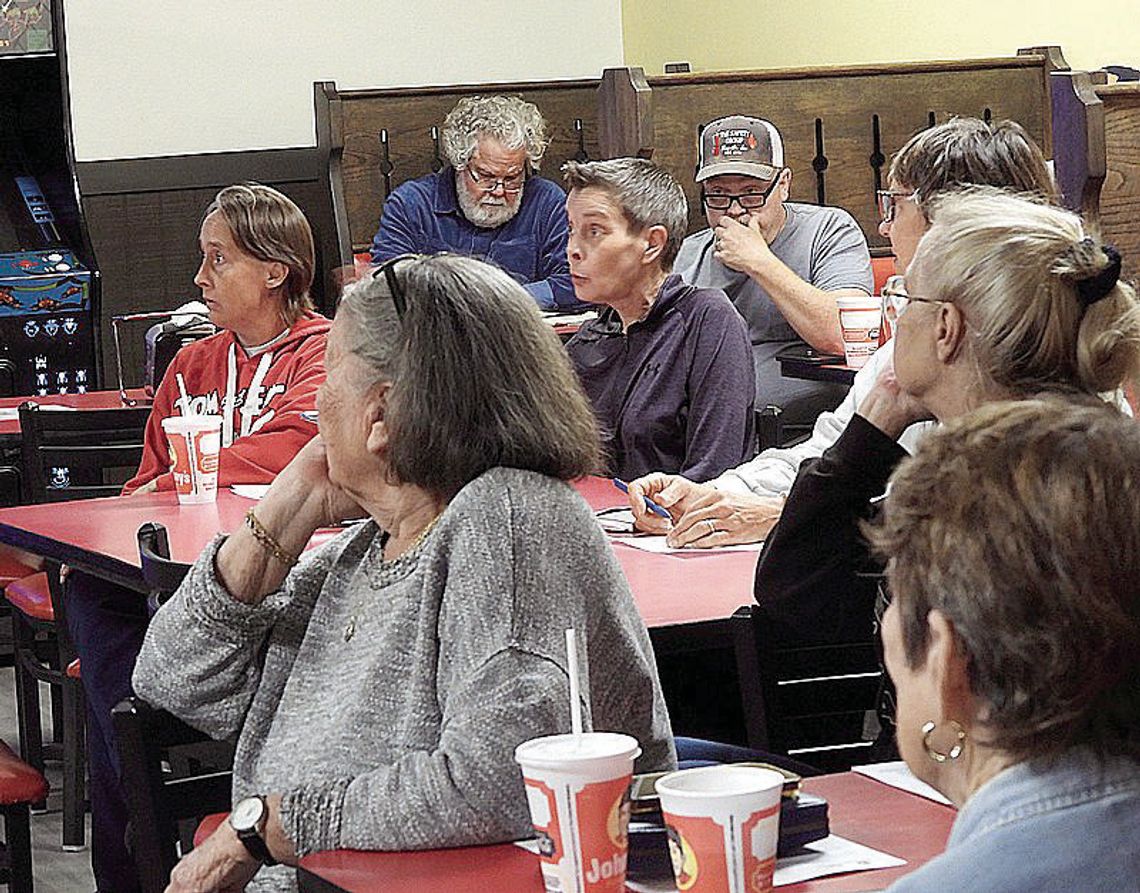
About two dozen people gathered at Johnny’s Pizza on Monday night for a town hall meeting long on skepticism and short on answers.
The meeting was hosted by the Sierra Club’s Delta Chapter to discuss the potential impact of Meta’s proposed $27 billion Hyperion data center project.
Sierra Club Delta Chapter chair and manager Dr. Angelle Bradford Rosenberg stressed it was not too late for residents to ask questions and get answers from their elected representatives.
The project would be Meta’s largest hyperscale facility, stretching across thousands of acres and powered by at least three new natural gas plants. According to Meta’s filings, the data center’s expected electricity demand has already risen from an initial 2.3 GW projection to as much as 5 GW, and environmental groups say the scale of the project raises significant questions for the region.
Rosenberg said the facility would consume “unprecedented amounts” of electricity and water while providing comparatively few permanent jobs. They also raised concerns that communities such as Richland Parish are becoming “sacrifice zones” for the nation’s growing hyperscale data-center industry.
Attendees received a packet summarizing a range of unresolved issues. The first focused on water: how much the center will use, where the water will come from, and how groundwater withdrawals might affect private wells, nearby farms, and droughtprone areas. Residents in Newton County, Ga., where another Meta facility is located, reported wells drying up and reduced water pressure during construction, according to the Sierra Club.
Air quality was another concern. Sierra Club speakers noted the three planned natural gas plants would emit nitrogen oxides, particulate matter, and other pollutants linked to asthma, heart disease, and respiratory irritation. Local schools, seniors and medically vulnerable residents could face heightened risks, they said.
The cost of new power plants and transmission lines emerged as a major point of debate. Entergy has estimated the new facilities at $3 billion. Although Meta has agreed to cover part of the cost of new gas plants, Sierra Club speakers said Entergy still intends to pass transmission-line expenses to customers. Louisiana Energy Users Group and other watchdog organizations have warned the project could lead to “unprecedented risk” for ratepayers, who have already seen bill increases in recent months.
Attendees such as Jerry Rials of Holly Ridge also voiced worries the additional demand could further strain Louisiana’s electrical grid, which has seen rising outages over the last decade. Entergy Louisiana forced controlled power outages in May 2025 due to grid instability, and speakers warned that higher data-center loads could worsen future reliability problems.
Tax incentives are another concern. Under Louisiana’s Act 730, data centers receive 20-year exemptions that reduce or eliminate many local and state taxes. Sierra Club representatives said these incentives could divert tens of millions of dollars away from parish services, including schools, healthcare, and infrastructure. They also noted while Meta has suggested the project could create up to 500 jobs, Louisiana law requires only 50 full-time positions for data-center tax eligibility, and the company has not confirmed whether those jobs would be filled locally.
Residents who spoke during the meeting said they were frustrated by the lack of detailed public information on water usage, pollution levels, transmission-line routing, or emergency protections if something goes wrong.
Rosenberg urged state regulators and Entergy to release plans, studies, and environmental data before approvals move forward. She also encouraged residents to attend upcoming public hearings and continue asking questions.
“No one is saying development can’t happen,” she said. “But the people who live here deserve full transparency about the costs, the risks, and who really benefits.”