
The U.S. Supreme Court has again rebuked the state of Colorado for its censorship and suppression, this time in the field of health care counseling.
How so? Kaley Chiles, a licensed, faith-based counselor in Colorado Springs, challenged the state’s 2019 law on talk therapy for minors. Chiles argued that the law restricted her ability to provide faith-based counseling to her patients who were seeking to change or modify some of their sexual behaviors and attractions.
The court held that Colorado’s conversion therapy ban, signed into law in 2019, violated the First Amendment because it only restricted talk therapy when the therapy aimed to prevent minors from embracing being transgender or gay.
That is such a flagrant free speech violation that it is surprising the state of Colorado would have sincerely believed such censorship could be permitted and deemed legal. In short, the law aimed to suppress and prohibit speech by a mental health counselor who suggested to patients that perhaps they were not gay or transgender.
I will acknowledge the creative argument that Colorado advanced to get around what it must have known was a free speech violation: that its law was really nothing more than a regulation of professional conduct (i.e., health care, much as a state may regulate doctors, attorneys and many other professions) and that the regulation of speech was only incidental and unintended. Nice try.
In Chiles v. Salazar, the high court held 8-1 that the state law discriminated based on viewpoint. Of course it does. It is classic viewpoint discrimination because the “viewpoint” being discriminated against is the one that may direct an individual in counseling back to a safer mental and emotional state and away from sex or gender delusion and behavior.
The state law did not aim to prohibit all speech regarding a patient’s struggle or confusion with sexual or gender identity. Only speech that recommends that a patient consider that they may not be either of those identities. However, counselors were completely free to provide “acceptance, support, and understanding for … identity exploration and development.”
Underscoring this point, Justice Neil Gorsuch wrote that the law permits Chiles to express acceptance and support for clients exploring their identity or undergoing gender transition, but forbids her from saying anything that attempts to change a client’s “sexual orientation or gender identity,” including efforts to change “behaviors,” “gender expressions,” or “romantic attractions.”
Laws suppressing speech on that basis, Gorsuch wrote, amounted to an “egregious assault” on the Constitution. “The First Amendment stands as a shield against any effort to enforce orthodoxy in thought or speech in this country.” He further emphasized that the First Amendment protects the inalienable right of every individual to decide for himself “how best to speak,” and laws regulating speech based on its subject matter or “communicative content” are “presumptively unconstitutional,” triggering “strict scrutiny” that requires the government to prove its restriction is “narrowly tailored to serve compelling state interests.” Colorado could not do so.
Further, aside from the legal issues of religious liberty and free speech, how can a health care expert be expected to fully address a mental health issue in therapy if they are not allowed to acknowledge the full spectrum of possible remedies? They cannot.
We would be remiss not to acknowledge similar prior censorship by Colorado. We recall the 2023 decision, 303 Creative LLC v. Elenis, in which the First Amendment barred Colorado from using the state’s Anti-Discrimination Act to force a website designer to create wedding websites for same-sex couples.
The Supreme Court held that the state could not force a person to create content conveying a message with which he or she disagrees.
Even earlier was the 2018 decision in Masterpiece Cakeshop v. Colorado Civil Rights Commission, in which the justices sided with baker Jack Phillips, finding that the Colorado Civil Rights Commission had shown unconstitutional hostility toward his religious beliefs that it did not show toward other bakers.
It is in moments like this that I reflect again on the brilliance of the Framers of our Constitution. Right there in the First Amendment, they mandated that government could not and should not suppress speech, nor favor one viewpoint over another.
This is why. The First Amendment enshrines the right of the American people to speak freely in the public square without government interference. Government censorship of speech is intolerable in a free society.
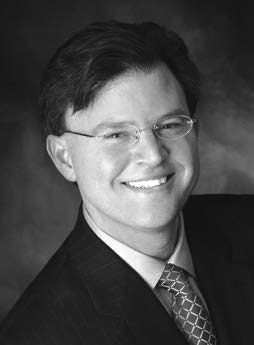
Royal Alexander is an attorney from Shreveport. He can be reached at [email protected].