
Ten people met Feb. 24 at the Richland Parish Library to focus squarely on the Meta data center under construction near Holly Ridge, weighing its economic promise against potential impacts on power rates, infrastructure and the environment.
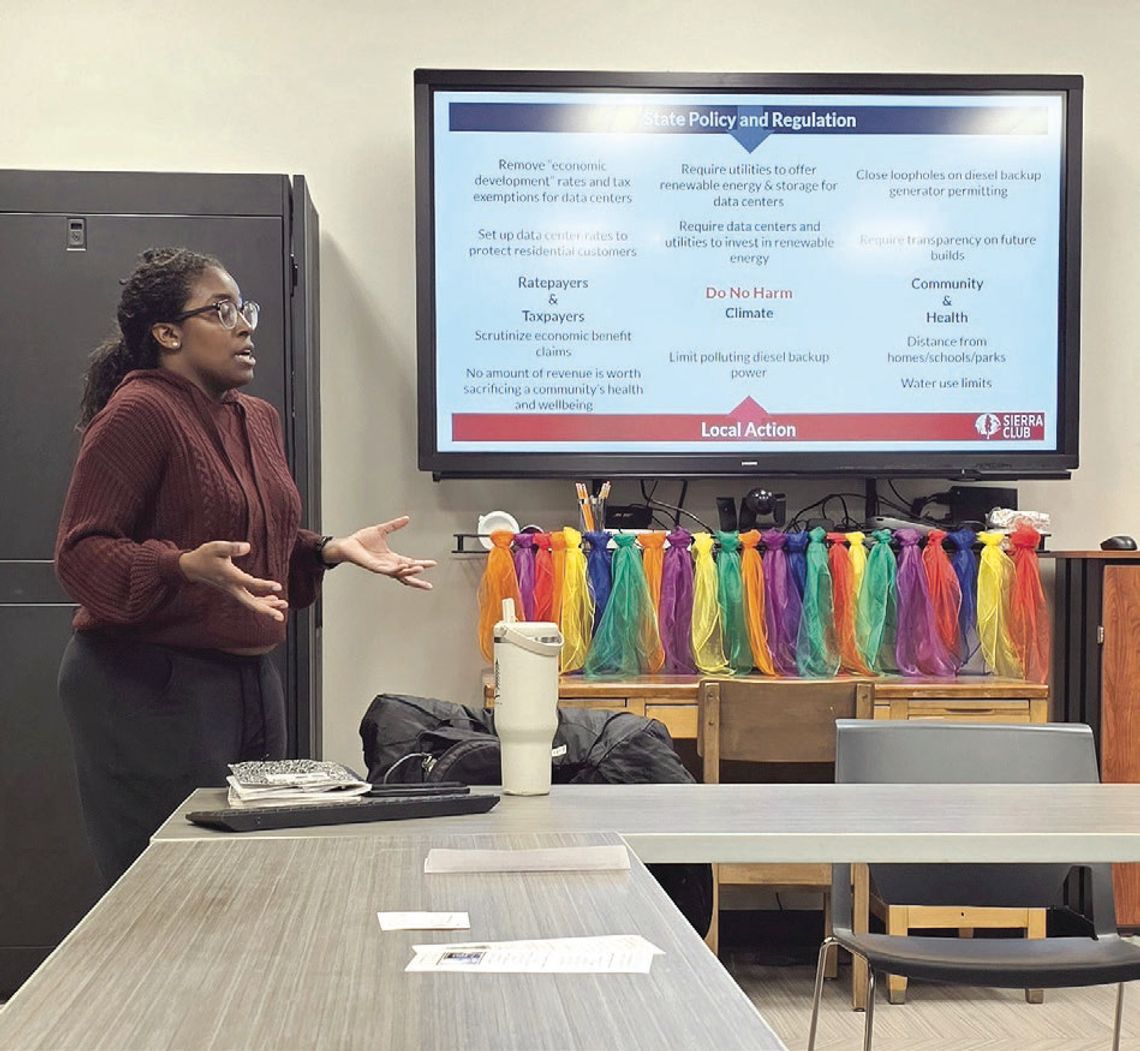
Dr. Angelle Bradford Rosenberg, chair and volunteer manager of the Sierra Club’s Delta Chapter, delivered a program titled Power Plays: But Who Pays? How Data Centers are Impacting Ratepayers and the Climate, examined the rapid expansion of large-scale data centers across the United States and in Louisiana, and what that growth could mean for local communities.
Rosenberg said the meeting focused on creating a plan for local engagement, noting that since the group last met in November, Meta received its air permits, clearing a major hurdle for its project. She also pointed to the company’s reported expansion of its investment from $10 billion to $27 billion.
Using maps and charts, Rosenberg outlined the scale of the data center industry. As of June 2025, operational data centers in the U.S. accounted for 43 gigawatts of power demand. By 2030, operational and planned facilities could reach 101 gigawatts.
To put that in perspective, she explained that one gigawatt equals 1,000 megawatts and can power an entire city, including about 200,000 homes and 25,000 businesses and schools.
Louisiana is among the states expected to exceed one gigawatt of data center capacity by 2030, according to data cited in the presentation.
“I’m excited,” Rayville Mayor Pro Tem Jerry Gordon said. “It’s going to bring jobs and community development.”
Rosenberg said utilities’ claims about economic development should be examined closely. One slide noted that 23 utilities claim more than 700 gigawatts of data center interest, a level of demand that would exceed current national electricity use by about 30 percent.
Gordon said Meta and the connected companies working with the project had been working with Rayville to help the town during the transition.
“They meet with us and say, ‘We have money available’,” Gordon said. “We tell them what we need and they either say yes or no.”
Gordon said funding from Meta is helping to expand the town’s airport and also to construct walkways and sidewalks needed in part of the town.
Much of the discussion centered on costs to ratepayers. Citing research from other states, the presentation argued that data centers can drive higher energy costs, require expensive transmission infrastructure and leave residential customers “holding the bag.”
Gordon agreed with other residents more transparency was needed about how the plant would affect things such as electric bills and water rates.
Rayville resident Curtis Harrison said he had concerns about the plant, but felt it was offering Rayville’s youth something priceless ... hope.
“We need this,” Harrison said. “We need something our youth can latch onto and feel like they can buy into.”
He noted the additional taxes from the construction are already helping the schools beef up their STEM and computer education curricula and getting the students excited about training for that future.
Additional concerns included increased reliance on fossil fuels, slower progress toward utility decarbonization goals and the use of diesel backup generators, which the presentation said can contribute to higher rates of cancer and respiratory illness. The presentation also addressed tax incentives and electricity rate structures, arguing that taxpayers and residential ratepayers often subsidize large data center projects through incentive rates and tax breaks.
In the final portion of the meeting, Rosenberg outlined policy recommendations at the state and local levels. Proposed actions included removing certain economic development rates and tax exemptions for data centers, setting rate structures to protect residential customers, requiring greater transparency about energy and water use and limiting diesel generator pollution.
Participants were encouraged to engage in local decision-making processes, including city council and planning commission meetings, and to share their concerns and personal stories.
The meeting concluded with a discussion of short-term and longterm opportunities for community involvement, including organizing locally, monitoring commitments made by developers and participating in a March 3 webinar on data centers.
Rosenberg said the goal is to ensure that electricity bills, land, water and public health are not sacrificed to meet the growing energy demands of large technology companies.